Embracing failure.
For 2026, I’m trying something new. Rather than starting the year with success-oriented resolutions, I’m flipping the script.
I want to create more opportunities for failure (for myself), and I want to help others do the same.
My professional and personal goals for the year ahead are failure-focused.
Why failure?
A quick Google search asking, “what is failure?” defines it as the absence of success. But what does that mean?
If success is defined by achieving a goal or a standard, and we do not achieve that for whatever reason, then essentially we have failed. So, when I am talking about being failure-focused, am I saying that I don’t want to achieve the goals that I set for myself?
Not really. In my experience embracing failure is the foundation for success.
Being failure-focused requires us to clearly articulate what we are trying to achieve. It holds the potential to centre our attention on the journey, not the end result. Most importantly, if we are actively trying to experience more failure within the goal-achievement process, then it helps neutralize any fear that we might be bringing to the table. Because it’s not actually failure that we’re trying to avoid, it’s the fear of experiencing the onslaught of negative emotions and self-talk that our minds bombard us with when we don’t achieve what we set out to do.
A failure-focused mindset frees us to take more risks. To try things that we are hesitant about trying. To innovate and troubleshoot and discover solutions. To figure out what doesn’t work. At worst, we fail, and since that was the goal, we hopefully feel more comfortable debriefing what went wrong and sharing our experiences of failure with others.
We are less defensive and better listeners when we plan for some failure. When we plan for some failure, our egos are considerably less bruised when it inevitably happens. We’re able to listen and better receive constructive feedback from others when they tell us their thoughts about what would have worked more effectively from their vantage point.
A focus on failure also frees us to do some things badly, to intentionally drop the ball on certain tasks, and to set better boundaries in our personal and professional lives. This year I’m asking, in what areas of my life do I want to not give my best effort? What am I a-okay with not achieving?
I’ve failed at a lot of things in my life. Some of those failures have felt devastating and others have been minor but cringe-worthy moments. And other failures have been unexpected gifts that led me down paths that I would not have otherwise noticed or chosen. Many of my failures, big and small, have taught me important lessons that I needed to learn in order to eventually reach a goal.
I’ve also achieved a lot of the goals that I’ve set for myself over the years (let’s call those successes). I can’t think of a single one of my successes that doesn’t have some sort of (often big) failure experience at its core.
My reason for taking a failure-focused approach is to make it feel less daunting to take brave, bold steps outside my comfort zone (and perhaps inspire others do the same). If my goal is to fail and learn from what didn’t work, then I have nothing to lose.
Let’s fail together.
In my last blog post before the holiday season, I wrote about “de-risking taking risks.” I talked about how the existing culture of higher ed tends not to be a safe place for people to try new things and fail (whether it be new technologies or teaching practices). Despite our understanding that we learn from mistakes, the risks associated with not achieving a positive outcome on the first try are sometimes too great for those within the higher ed system . . . and then we wonder why change isn’t happening!
So, what can we do?
I think, as a good starting point, those of us who are in positions where we can do so, need to better model and talk about our failures. If we can begin to normalize failure within our spheres of influence, we’ll help make it safer for others to take risks and share openly about what went wrong when failure happens. Over time, failure-focused conversations can help us figure out best practices and build a more resilient (and more successful!) system.
You can also join me next week for an interactive webinar where we’ll talk about being failure-focused in order to better support technology adoption, digital literacy.
Here are the details:
‘De-risk’ taking risks: Re-thinking how we support technology adoption and responsible use in higher education
January 15 at 1 pm Eastern (10 am, Pacific)
Register here: https://us02web.zoom.us/meeting/register/QezNBsHPQjmMUW3ioDr3ng
Resistance to technology use in education isn’t just about the tech—it’s about trust.
Technological advancements are reshaping teaching, learning, and the workforce. Yet, efforts to boost digital literacy and integrate technology haven’t moved the needle. Why?
During this webinar, we’ll unpack why each wave of innovation—whether it’s Meta glasses or generative AI—can feel like a fresh source of resistance, even though the root causes haven’t changed. Concerns about academic integrity, quality, and buy-in have been with us all along. The technologies may be new, but the reasons behind the hesitation are not.
We’ll explore strategies for systemic change through a pragmatic lens, acknowledging the diverse perspectives and contextual factors that make this challenge complex.
And, together we'll walk through practical approaches that to help make technology adoption feel less risky (and more do-able) for others at your institution.
My failure-focused goals for 2026
What does a failure-focused goal look like? Here are a couple of mine for the year ahead.
In creating and launching a set of resources to support digital literacy development and technology adoption, I want to figure out through failure what does not work for (or resonate with) different segments of the higher ed community and why.
I will intentionally choose to fail at making homemade meals for my kids a lot of the time so I can prioritize other things (including showing up for them at their activities/events and being fully in the moment while there!).
As a final aside, I know for many folks in higher ed, it’s been a rough couple of years with program cuts, job losses, and a lot of uncertainty. A lot of people are finding themselves in less-than-ideal situations where they are having to learn new things or even carve entirely new career paths for themselves. About ten years ago, I was going through something similar — the path from there to here was messy, painful, and failure-filled (and I learned so much along the way!). When I talk about failure, I speak from the place of someone who has had to sit with it, look it square in the eye, and learn to embrace it’s awfulness and wonderfulness as an important part of the human experience. If that’s where you are now, I have something in the works that I’ll be launching soon to help support you on your journey to your next endeavour. Stay tuned.
Nicole
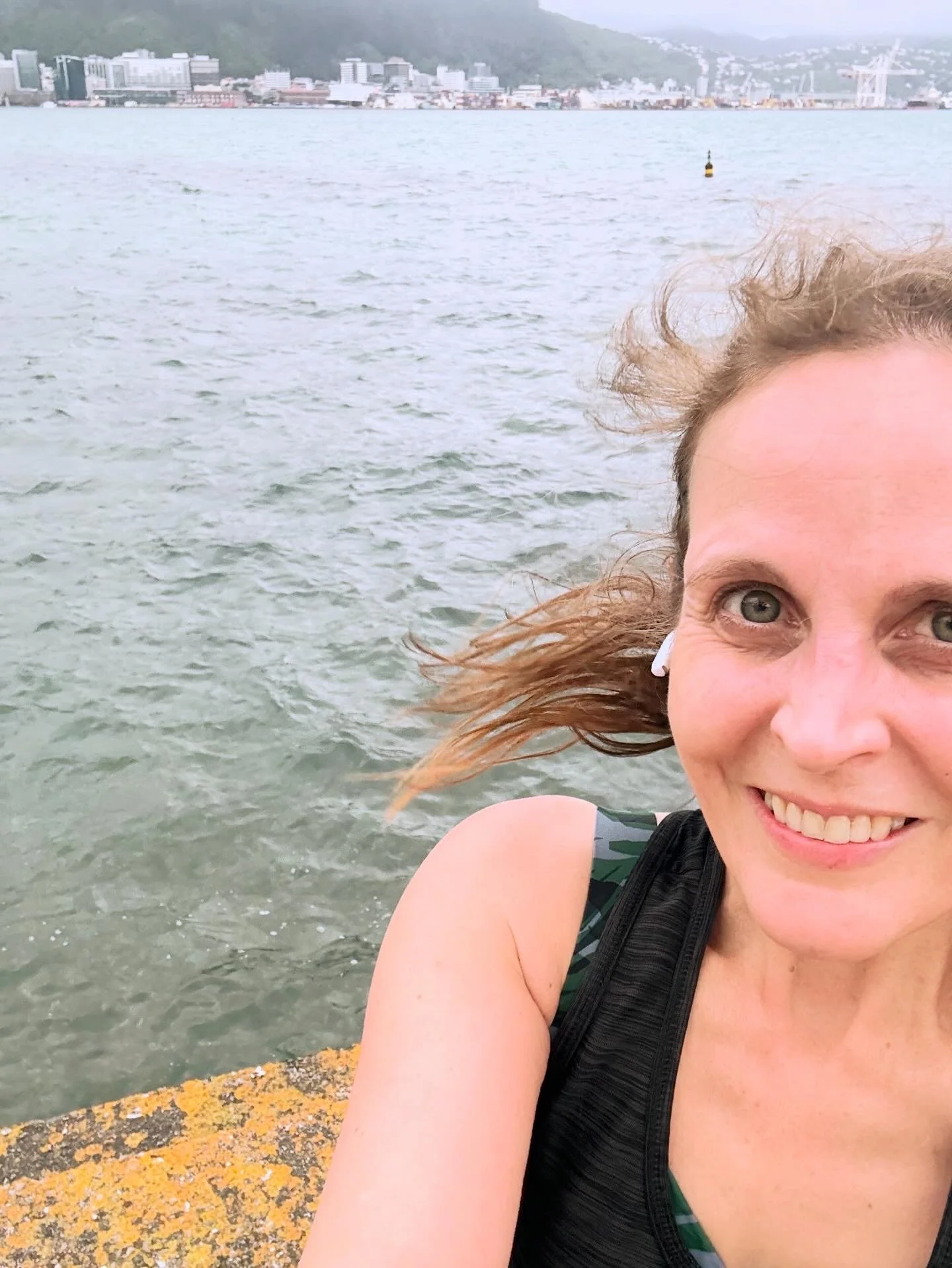
I close each blog post with a random photo that shares a bit more about me:
I love running, but I’m terribly inconsistent when it comes to training toward any particular running goal. My failure-focused goal for 2026 is to continue fail at training consistently, but to go out for a mediocre run anyway whenever I feel like it in the moment.
When I was in New Zealand a couple of months ago, there was a beautiful 5 km running route along the waterfront and I got a great run in most mornings!